
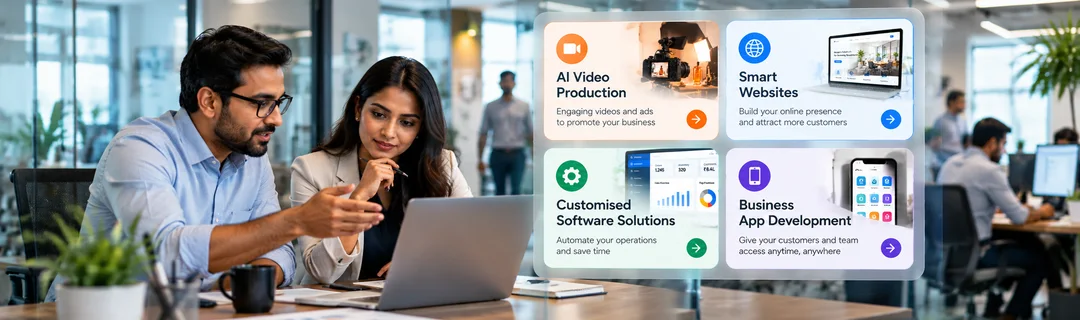
Why 2026 is the Tipping Point for Indian SMEs
The year 2026 marks a significant shift for small and medium enterprises across India. With digital adoption accelerating and technology costs dropping, SMEs now have access to powerful tools that were once reserved for large corporations. Artificial intelligence, intelligent websites, tailored software solutions, and mobile business applications are no longer optional—they are essential for staying competitive and scaling efficiently.
Many Indian SMEs still rely on manual processes, basic websites, and off-the-shelf tools that limit their potential. By embracing these technologies strategically, businesses can reduce costs, improve customer experience, automate operations, and unlock new revenue streams. This article explores practical approaches that SMEs can adopt to grow faster in 2026.
The Role of AI in Driving SME Growth
Artificial intelligence is transforming how small businesses operate. From chatbots that handle customer queries 24/7 to predictive analytics that forecast demand, AI delivers measurable advantages without requiring massive teams.
For manufacturing SMEs in Kanpur or retail shops in Tier-2 cities, AI can optimise inventory, personalise marketing campaigns, and detect fraud in real time. Tools powered by machine learning can analyse sales patterns and suggest pricing strategies that maximise profit margins.
SMEs should start small—perhaps by integrating AI for customer support or content generation—before scaling to more complex applications like demand forecasting. The key is choosing solutions that integrate easily with existing systems and deliver quick returns.
By 2026, AI capabilities will become more accessible through cloud platforms, making it feasible for even micro-enterprises to benefit. Early adopters will gain a significant edge in efficiency and customer satisfaction.
Smart Websites: Your 24/7 Sales and Marketing Engine
A basic brochure website is no longer enough. In 2026, SMEs need smart websites that are fast, mobile-friendly, SEO-optimised, and integrated with business tools. These websites act as powerful lead generators and sales platforms.
Features like live chat, personalised product recommendations, integrated payment gateways, and automated email follow-ups turn a simple site into a growth engine. For service-based businesses, booking systems and virtual consultations can reduce no-shows and improve conversion rates.
website development that focuses on user experience and performance can dramatically improve search rankings and customer trust. A well-designed website also serves as the foundation for other digital initiatives, connecting seamlessly with CRM systems and analytics tools.
Indian SMEs that invest in modern web platforms often see higher engagement and repeat business. The goal is to create digital experiences that match or exceed what customers encounter with larger brands.
Custom Software Development: Solving Unique Business Challenges
Every SME has unique processes shaped by its industry, location, and scale. Generic software rarely fits perfectly, leading to workarounds and lost productivity. This is where custom software development becomes valuable.
custom software development allows businesses to build solutions tailored to their exact needs—whether it's a production planning system for manufacturers, a billing and inventory platform for distributors, or a field service management tool for contractors.
Custom applications can integrate with existing hardware, legacy systems, and third-party services, creating a unified digital ecosystem. They also offer better data security and scalability compared to many ready-made alternatives.
While the initial investment may seem higher, the long-term savings in time, errors, and inefficiency often justify the cost. SMEs that develop custom tools report smoother operations and the ability to handle increased volumes without proportional increases in staff.
Business Apps: Empowering Teams and Customers on the Move
Mobile applications are changing how SMEs interact with both employees and customers. business app development creates tools that enable field teams to update records in real time, managers to monitor performance remotely, and customers to place orders or track deliveries conveniently.
For example, a logistics SME can use a custom app to optimise routes, reduce fuel costs, and provide live tracking to clients. Retail businesses can deploy apps that offer loyalty programmes, personalised offers, and easy reordering.
These applications also facilitate better data collection, helping owners make informed decisions. With 5G networks expanding across India, the performance and reach of business apps will improve significantly by 2026.
The most successful implementations start with clear objectives—identifying specific pain points or opportunities—rather than trying to replicate every feature of competitor apps.
Integrating AI Video Production and Commercial Production
Visual content has become essential for marketing, training, and customer education. AI-powered video tools now allow SMEs to create professional videos at a fraction of traditional costs.
AI video production can generate explainer videos, product demonstrations, and social media content quickly. Similarly, AI commercial production helps create compelling advertisements that resonate with target audiences without expensive shoots or actors.
These technologies enable consistent branding across platforms and rapid iteration based on performance data. For SMEs with limited marketing budgets, this represents a game-changing opportunity to compete with larger players in terms of content quality and quantity.
Businesses can use these videos on their smart websites, in customer apps, and across social channels to build trust and drive conversions.
Practical Steps to Get Started in 2026
Assess Current Gaps: Map out manual processes, customer friction points, and areas where data is underutilised.
Prioritise High-Impact Projects: Focus first on solutions that address immediate revenue or cost-saving opportunities, such as improving the website or automating repetitive tasks.
Choose the Right Technology Partner: Work with teams that understand both technology and Indian SME realities. Local expertise often translates to more practical implementations.
Plan for Integration and Training: Ensure new tools connect with existing systems and that your team receives adequate training for smooth adoption.
Measure and Iterate: Track key metrics like customer acquisition cost, operational efficiency, and revenue growth. Use insights to refine your digital strategy continuously.
Many SMEs begin their journey with a modern website or simple AI tools before progressing to custom software and comprehensive business applications. The important factor is maintaining momentum and viewing technology as an ongoing investment rather than a one-time expense.
Preparing for the Digital Economy of 2026
The combination of AI, smart websites, custom software, and business apps creates powerful synergies. A smart website powered by AI can feed data into custom software, which in turn optimises operations visible through business apps. AI-generated videos enhance all these channels.
This integrated approach helps SMEs reduce dependency on manual labour, respond faster to market changes, and deliver superior customer experiences. In a competitive landscape where consumers expect digital convenience, those who fail to adapt risk falling behind.
By 2026, technology will be even more embedded in everyday business operations. SMEs that start planning and implementing now will be better positioned to scale, expand geographically, and build sustainable competitive advantages.
The transformation does not need to be overwhelming. Small, focused steps using reliable partners can yield significant results over time. The businesses that thrive will be those that treat digital tools as strategic assets rather than mere expenses.
If your SME is ready to explore these opportunities, professional guidance can help identify the most suitable path forward. Consider reaching out to experts who specialise in practical digital solutions for Indian businesses.
Conclusion
Growth in 2026 will belong to SMEs that intelligently combine AI capabilities with robust digital infrastructure. Smart websites serve as the public face, custom software and business apps handle the operational backbone, while AI and video production amplify marketing and efficiency.
The technology landscape offers unprecedented opportunities for smaller businesses to punch above their weight. With careful planning and phased implementation, Indian SMEs can achieve faster growth, higher profitability, and greater resilience.
Start by evaluating your current digital maturity and identifying one or two areas where technology can make the biggest immediate difference. Consistent progress in these directions will compound over time, positioning your business strongly for the opportunities ahead.
To discuss how these technologies can be applied to your specific business context, connect with specialists who understand both the technology and the practical challenges faced by SMEs in India today.